
There is a moment every woman knows.
You run your fingers through your hair and pull back a handful. Or you look at the bathroom floor after combing and feel your stomach drop. Or you tie your hair up and notice, somewhere between one week and the next, that your ponytail got thinner.
It is a quiet kind of panic. Because hair fall does not announce itself. It creeps in slowly. And by the time you notice, it has already been going on for a while.
The worst part is not the shedding itself. The worst part is not knowing why.
So that is what this blog is for. Not to scare you. Not to sell you something. But to sit down with you and walk through the 10 most real, most common reasons your hair is falling out, explained in plain language, so you can actually understand what is happening inside your scalp.
Because once you know the reason, you can do something about it.
This is important, so let us get it out of the way first.
Losing hair every day is completely normal. The average person sheds between 50 and 100 hairs daily. This is part of your hair’s natural growth cycle. Hair grows, rests, and then falls out to make space for new hair to come in.
You are not supposed to have zero hair in your brush. That would actually be strange.
The problem starts when you are losing more than this. When clumps come out in the shower. When your part looks noticeably wider. When your hair used to be thick and now it just is not.
That is when your body is telling you something is off. And that is what the 10 reasons below are about.
Let us start with the one reason nobody wants to hear but that affects the most people.
If your mother has thin hair, or your khala had a wide part by her 40s, or hair loss runs through the women in your family, there is a good chance your genes are involved in your own shedding.
This is called androgenetic alopecia, or hereditary hair loss. It is the most common cause of hair fall worldwide. What happens is this: your hair follicles are sensitive to a hormone called DHT. Over time, DHT slowly shrinks the follicle. The hairs that grow from it become thinner and shorter, until eventually, the follicle stops producing hair at all.
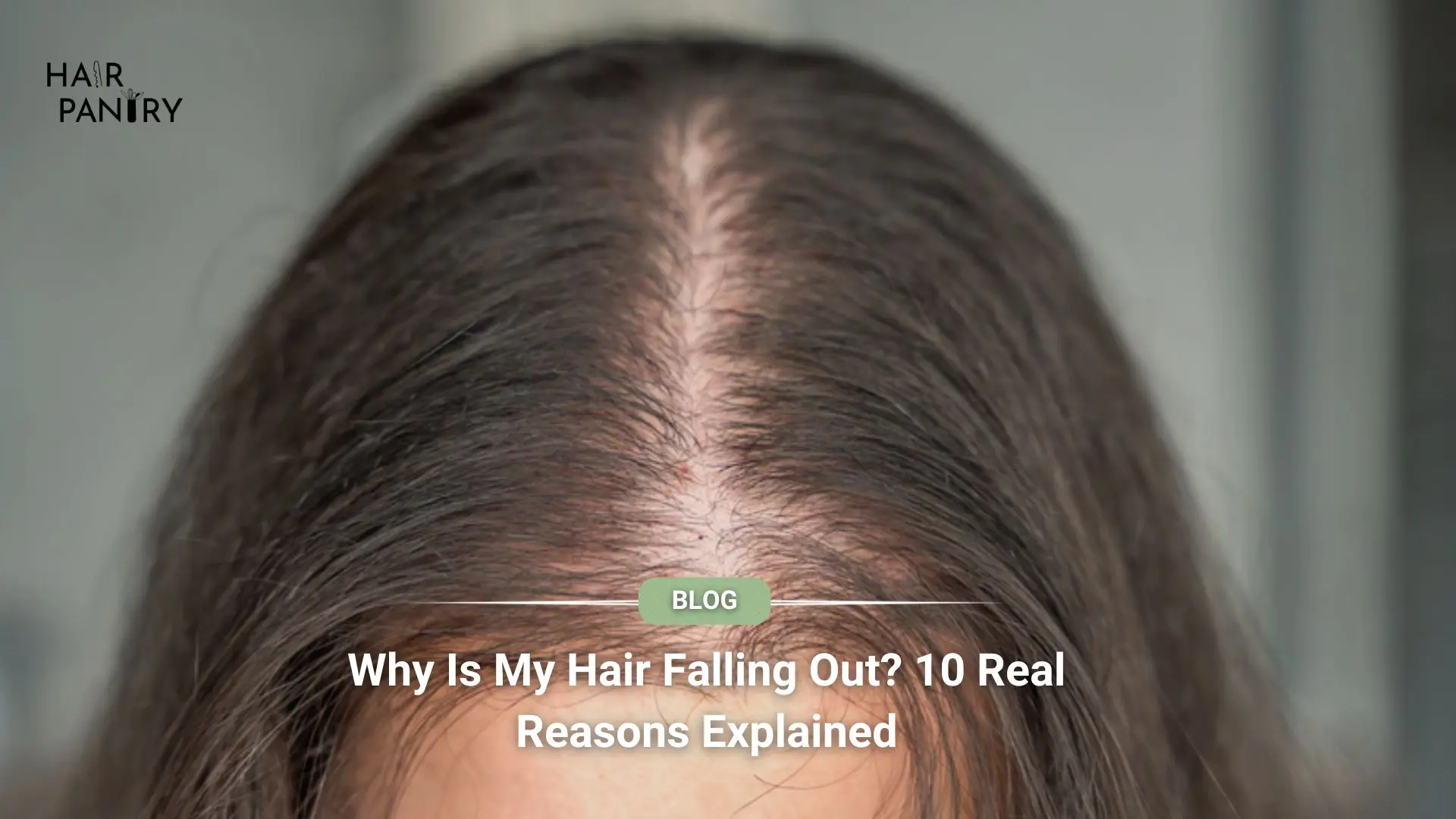
In women, this usually shows up as gradual thinning across the crown. The hairline mostly stays, but the overall volume drops. You might notice your scalp showing through more. Your ponytail getting lighter.
The uncomfortable truth is that you cannot change your genes. But here is what most people do not know: you can slow this process down significantly if you start early. Consistent scalp care, the right ingredients, and products that target follicle sensitivity can genuinely make a difference over time. The key word is early. Do not wait until the loss is heavy.
This is the one reason that catches people off guard the most, because of the timing.
When you go through a stressful period, your hair does not fall out immediately. It falls out two to three months later. So by the time you notice the shedding, you have already forgotten about the exam week, the family fight, the illness, or the rough patch you went through. You think “nothing changed” but actually, something changed a few months ago.
What happens is that stress pushes a large number of your hair follicles into the resting phase of the growth cycle at the same time. Normally, only about 10 to 15 percent of your hair is resting at any point. After a stressful event, that number can jump to 50 or even 70 percent. All of those hairs then fall out around the same time. The medical name for this is telogen effluvium.
The good news is that this type of hair fall is temporary. Once the stressful period passes and your body recovers, hair usually starts growing back on its own.
The bad news is that if stress stays in your life, the shedding keeps going. This is why so many women in Pakistan have chronic hair fall. Not because of one event. But because life is continuously stressful and the body never fully recovers.
Managing stress is genuinely part of managing hair fall. Sleep, food, and moments of rest are not luxuries. For your hair, they are medicine.
Your hair is made of protein. It is built from nutrients. If your body is not getting enough of what it needs, it makes a decision: stop sending nutrients to your hair and send them to the organs that need them more.
Hair is not essential for survival. So when resources are low, hair gets cut off first.
The most common deficiencies that cause hair fall are:
Iron: Very common in Pakistani women, especially those with heavy periods or who have recently given birth. Low iron means less oxygen reaches your hair follicles. Growth slows. Shedding increases.
Protein: Hair is almost entirely made of a protein called keratin. If you are not eating enough protein, your hair has nothing to build itself with.
Biotin and Zinc: Both play a role in follicle health. Not eating enough of these weakens the root.
Vitamin D: Research shows that low vitamin D is linked to hair loss, and many people in Pakistan are deficient despite living in a sunny country, because of indoor lifestyles and sun avoidance.
The fix here is not complicated. Add eggs, lentils, red meat, fish, and leafy greens to your meals. Eat a varied diet rather than the same two or three things every day. If you suspect a deficiency, get a blood test. It takes five minutes and tells you exactly what is missing.
Hormones control almost everything in your body, including your hair growth cycle. When they shift, your hair feels it.
This is why hair fall is so closely tied to the stages of a woman’s life.
During pregnancy, estrogen levels go up. This actually makes hair thicker and fuller for most women. But after delivery, estrogen crashes back down. All the hair that was being held in the growth phase suddenly enters the resting phase at once. This is why postpartum hair fall can be so dramatic. Handfuls in the shower, a thin hairline, hair everywhere. It is alarming but it is almost always temporary.
PCOS is another major one, and it is extremely common among Pakistani women. Polycystic ovary syndrome raises androgen levels, which directly causes the same type of hair thinning as genetic hair loss. If your periods are irregular and your hair is falling out, PCOS is worth checking.
Thyroid problems are also a frequent cause. Both an underactive and overactive thyroid disrupt the hormones that regulate hair growth. Hair becomes thin, dry, and brittle. A simple blood test can check your thyroid levels.
If your hair fall feels connected to your cycle, your weight, your skin, or your energy levels, get your hormones tested. There is almost always a connection.
Think of your scalp as the soil in a garden. Healthy soil grows healthy plants. Poor soil grows weak ones, or nothing at all.
Many women focus entirely on their hair strands and ignore the scalp underneath. But the scalp is where every single hair begins. If it is blocked, inflamed, oily, or infected, the hair growing from it will suffer.
Dandruff is the most common scalp issue in Pakistan, made worse by humidity, hard water, and stress. When dandruff is left untreated, it can inflame the scalp and physically block hair follicles. Over time, this disrupts the growth cycle and leads to thinning.
Excess oil buildup is another issue. If you are not washing your hair regularly enough, oil, dead skin cells, and product residue build up around the follicles. This creates an environment where bacteria and fungi thrive. Hair growth slows.
The fix starts with the basics: keep your scalp clean, use the right shampoo for your specific concern, and add a weekly scalp massage to your routine. Massage increases blood circulation to the follicles, which brings more oxygen and nutrients to them. It is one of the simplest, most effective things you can do for hair health.
If your scalp is oily and flaky at the same time, you need products specifically made for that combination. Generic shampoos often make it worse, not better.
This one is sneaky because the damage does not look like damage at first. It looks like hair fall.
If you wear your hair in a tight ponytail every day, the constant pulling at the roots weakens the follicles over time. Start at the hairline. You might notice small broken hairs or a receding edge. This is called traction alopecia. It is caused entirely by styling habits, not genetics, not hormones, just tension.
Heat is another culprit. Straighteners, curling irons, and blow dryers reach temperatures that break down the protein bonds in your hair strand. The hair does not fall from the root. It snaps in the middle. But it looks exactly like hair fall. If you see short, broken pieces of hair rather than full-length strands with the root attached, heat damage is likely the cause.
Chemical treatments like bleaching, coloring, and rebonding weaken the hair structure from the inside out. Done repeatedly without proper recovery time, they make hair fragile and prone to breakage.
The solution is not to never style your hair. It is to be strategic about it. Loosen your hairstyles. Let your hair air dry when you can. Use a deep conditioning mask at least once a week to restore moisture and strength to strands that have been through a lot.
This is one of the most underrated causes of hair fall in Pakistan, and almost nobody talks about it.
Hard water contains high levels of minerals, mostly calcium and magnesium. When you wash your hair with hard water, these minerals deposit on your scalp and hair shafts. Over time, the buildup clogs follicles, makes hair feel rough and dry, and causes more breakage.
If you live in a city and have tried product after product without seeing results, hard water might be the missing piece of the puzzle. Your hair might actually be fine. But the water you are washing it with is undoing everything.
Signs that hard water is affecting you: your hair feels dry and tangled right after washing. Products do not seem to work the way they should. Your shampoo does not lather well.
Using a clarifying treatment once or twice a month can help remove mineral buildup. A weekly hair mask also helps restore the moisture that hard water strips away.
Sometimes hair fall is not the main problem. It is a symptom of something else happening in the body.
Several medical conditions show up first through the hair:
Anemia (low iron in the blood) is very common in Pakistani women, especially after pregnancy or with heavy menstrual cycles. The body diverts whatever iron it has to the organs, and hair follicles get none.
Alopecia areata is an autoimmune condition where the immune system attacks hair follicles by mistake. It causes patchy, circular bald spots on the scalp. It is not contagious. It is not caused by stress directly. And it requires medical treatment, not just better shampoo.
Scalp infections, including ringworm (tinea capitis), cause the hair to break off at the surface, leaving patches of short, stubby hair or bare skin. These are fungal infections that are treated with antifungal medication.
Lupus and other autoimmune conditions can also cause hair fall as a secondary symptom.
If your hair is falling in patches, or if it has been falling steadily for months with no response to anything you try, please see a dermatologist. Some causes cannot be fixed with a better routine. They need a diagnosis.
Many women in Pakistan try crash diets to lose weight quickly. Cut out entire food groups. Eat very little for weeks. Take extreme measures.
The body responds to this as a physical shock. Similar to major surgery or a serious illness, sudden drastic weight loss or severe calorie restriction can push hair follicles into the resting phase. Two to three months later, heavy shedding begins.
This is telogen effluvium triggered by nutrition, not stress. The treatment is to slowly return to balanced eating and give the body time to recover. Supplements can help in the short term while you rebuild your nutritional stores.
Slow, sustainable weight loss does not trigger this response. It is only the extreme, rapid kind that does.
Hair naturally changes as you get older. Growth slows down. The hair shaft becomes finer. Follicles that have been producing hair for decades start to slow down, and eventually some stop entirely.
This is a natural process. But in women, it is often accelerated by declining estrogen levels, especially after menopause. The protective effect that estrogen has on hair follicles goes away, and thinning follows.
What most women do not realize is that this process begins in your 30s. You do not wake up one day at 55 with thin hair. It is gradual, starting years before.
The practical response is to start taking care of your scalp seriously before the thinning becomes obvious. Good scalp nutrition, consistent hair care, and targeted products used early can maintain density for much longer.
Use this simple guide to narrow it down:
| What You Are Seeing | Most Likely Cause |
| Heavy shedding 2 to 3 months after something hard | Stress or telogen effluvium |
| Gradual thinning all over the scalp | Nutritional deficiency or hormonal |
| Thinning at the crown, hairline mostly fine | Genetics or PCOS |
| Round, patchy bald spots | Alopecia areata |
| Thinning edges and front hairline | Tight hairstyles |
| Itchy, flaky scalp plus hair fall | Dandruff or scalp infection |
| Hair breaks mid-strand, not from the root | Heat or chemical damage |
| Nothing works despite trying everything | Hard water or undiagnosed medical cause |
You do not need to fix everything at once. Start with one or two changes and be consistent.
Oil your scalp twice a week. A good hair oil applied to the scalp and massaged in gently improves blood circulation, nourishes the follicles, and reduces dryness. Leave it for at least an hour before washing. This one habit alone can make a visible difference over time.
Switch to a gentle shampoo. If your current shampoo has sulfates and your scalp is sensitive or dry, it might be making things worse. Look for shampoos made for your specific concern, whether that is dandruff, hair fall, or dryness.
Add a weekly hair mask. Masks restore moisture and protein to strands that have been damaged by heat, hard water, or styling. Once a week is enough.
Use a scalp serum consistently. This is especially important if genetics or hormonal causes are involved. A serum applied directly to the scalp works at the follicle level, which is where hair fall actually starts. The Regain Max 14% Rapid Hair Growth Serum is worth looking into if you have been struggling with shedding for a while. It works best when applied to the scalp daily, not to the hair itself, and users typically start noticing a difference after four to six weeks of consistent use.
Eat better. Add protein, iron-rich foods, and vegetables to your daily meals. Drink enough water. These are basics that make a bigger difference than most people expect.
Be patient. Hair grows slowly. Results from any change in diet, products, or routine take at least four to eight weeks to show up. Most people quit before that. The ones who see results are the ones who stay consistent.
Please visit a dermatologist or doctor if:
Blood tests for iron, thyroid, vitamin D, and hormones can identify issues that no shampoo or serum can fix on their own. Catching these early always gives better outcomes.
Hair fall feels personal. It affects how you look in the mirror, how you feel about yourself, how you carry yourself through the day.
But it is not a life sentence. Most causes are reversible with the right information, the right treatment, and enough time.
You now know the 10 real reasons behind it. You know how to identify which one might apply to you. And you know what to do next.
Start there. Stay consistent. And be kind to your scalp because it is doing its best, just like you are.